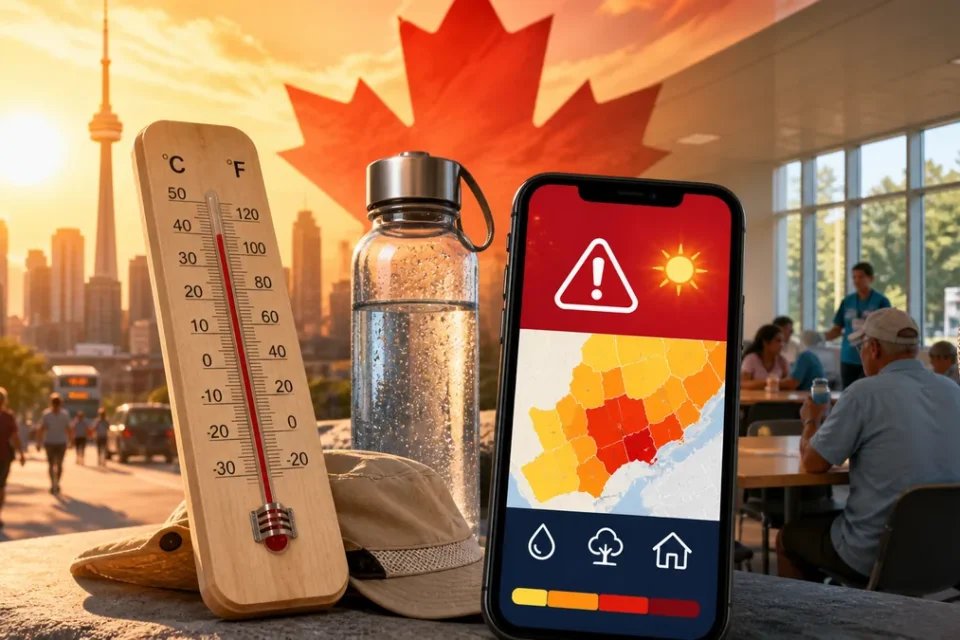
Environment and Climate Change Canada issues heat warnings when forecast temperature or Humidex reaches health-impact thresholds, usually over at least two days without enough overnight relief.
The short answer
Thresholds vary by region. Use WeatherCAN or Canada.ca/weather for your location, then prioritise cooling, hydration and checking people at higher risk.
Why the threshold is regional
A temperature that is unusual and dangerous in one part of Canada may be common elsewhere. Warning criteria combine daytime heat, overnight lows, humidity and health evidence. The impact section of the alert matters more than a national temperature comparison.
Prepare before the hottest hours
Close blinds, identify an air-conditioned public space and reschedule strenuous activity. Check on older neighbours and people with chronic conditions. Never leave a person or pet in a parked vehicle, even for a short stop.
Recognise heat illness
Headache, nausea, dizziness, rapid breathing, extreme thirst and reduced urination can indicate heat exhaustion. Move to a cool place and drink water. Confusion, fainting, very hot skin or loss of coordination can indicate heat stroke: call 911 and begin cooling.
Heat and wildfire smoke
Hot weather and smoke can occur together. Government guidance says keeping cool may take priority when overheating is an immediate danger. Check the Air Quality Health Index and local public-health advice when choosing between open windows and filtered indoor air.
Practical checklist
- Enable local WeatherCAN alerts
- Drink before feeling thirsty
- Find a cool place
- Check people at higher risk
- Call 911 for signs of heat stroke
What to verify before you act
Fans can improve comfort but may not cool the body effectively at very high indoor temperatures. Seek an air-conditioned location when the home remains dangerously hot.
Frequently asked questions
Why is this topic trending now?
Search interest has risen, but a search trend alone does not prove that a viral claim is accurate. This guide separates confirmed information from assumptions.
What is the best first step?
Start with the official source linked below, check its update time and confirm that the information applies to your location and circumstances.
Official sources
Information checked on August 20, 2026. Rules and live situations can change, so verify the official source before acting.
Related : more Canadian practical guides
How to use this guide efficiently
For Canada heat warning, define the exact question first: are you checking a live outage, a date, eligibility, a safety action or an unconfirmed report? Open the primary source in a separate tab and compare its location, publication time and scope with your circumstances. This prevents a technically accurate but outdated answer from driving the wrong decision. If sources conflict, give more weight to the competent authority and the most recent dated update. A lack of official confirmation should be described as uncertainty, not turned into a definite denial or confirmation.
A three-stage action plan
Now: take only the urgent, reversible steps described above. Next: save relevant lot numbers, receipts, screenshots, correspondence or reference numbers. Later: recheck the official page when the situation is likely to change. For an immediate health threat, fraud, physical danger or legal deadline, an online guide cannot replace emergency services or a suitably qualified professional. The purpose of “Canada heat warning: What the alert means and how to stay safe” is to help readers ask better questions and avoid acting on a viral headline alone.
Warning signs that require another check
Be cautious when a message demands immediate payment, asks for a password or verification code, guarantees an outcome, or provides no date and no primary source. Check names, model numbers, units, time zones and geography. Save the official URL rather than relying on a screenshot because live pages can carry corrections, expanded recall ranges, changed schedules or updated instructions.
Keeping the information useful
Share the conclusion together with its source and check time. Do not crop away qualifications or eligibility limits. If you return later, repeat the core check instead of assuming the situation stayed unchanged. This small discipline makes practical search content safer and more useful.