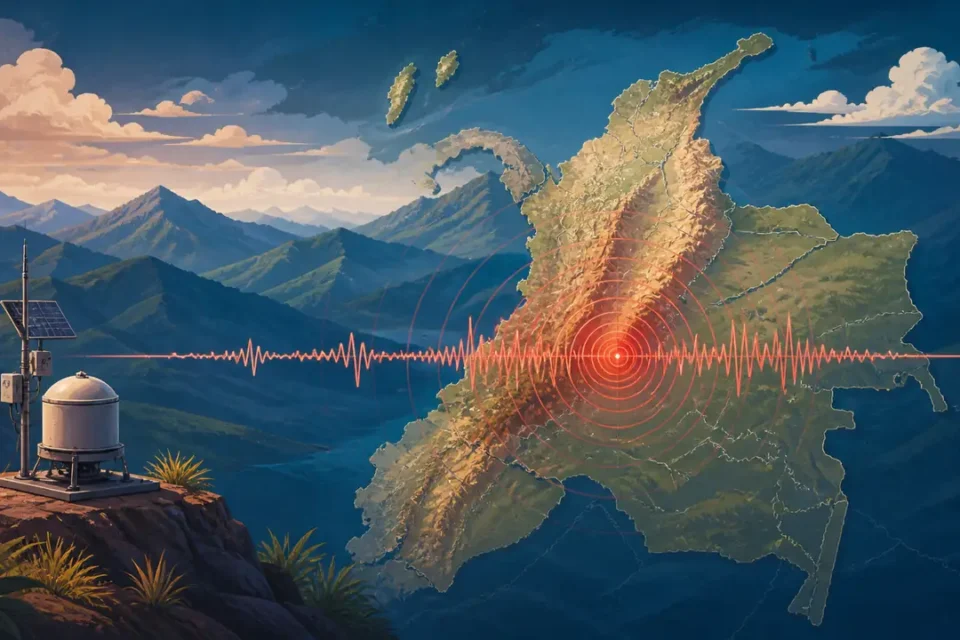
A magnitude 7.4 earthquake struck western Colombia on August 10, 2026. Les premières informations évoluent, ce qui explique le pic de recherches sur la magnitude, la zone touchée et les répliques. Dans ce type de situation, il est essentiel de distinguer une donnée scientifique confirmée d’une information qui circule trop vite.
What is confirmed so far
L’US Geological Survey a situé l’épicentre près de San José del Palmar, dans le Chocó. Associated Press rapporte des dégâts importants et un bilan humain provisoire. Ces chiffres doivent être considérés comme évolutifs : les autorités révisent leur évaluation à mesure que les secours atteignent les zones touchées.
What does a magnitude 7.4 mean?
La magnitude mesure l’énergie libérée à la source ; elle ne résume pas à elle seule les dégâts. La profondeur, la distance, le type de sol, la qualité des constructions et l’heure du séisme modifient les effets ressentis. Deux séismes de magnitude proche peuvent donc avoir des conséquences très différentes.
Why aftershocks are possible
Après un événement majeur, des répliques peuvent se produire. Elles ne permettent pas de prédire avec précision un autre séisme important, mais elles justifient le respect des consignes locales. Les personnes concernées doivent suivre les autorités colombiennes, vérifier leurs proches par message et éviter de relayer des vidéos sans lieu ni date.
How to follow reliable information
- Privilégiez le service géologique et la protection civile.
- Vérifiez l’heure et le lieu précis.
- Comparez plusieurs sources reconnues.
- Ignorez les bilans non attribués.
- Ne partagez pas de demande d’aide non vérifiée.
Bottom line
Le séisme est un événement grave en cours. Pour comprendre les mises à jour, préférez les données des autorités et les dépêches identifiées plutôt que les rumeurs. Source : AP.
À lire aussi : Que faire avant, pendant et après un épisode météo violent ?
Turn an alert into a practical decision
A useful warning identifies an area, time window, level and hazard. Check your address or route on the responsible authority’s map first. A national headline may be accurate without applying to your location. Then read the update time because a storm track, smoke plume, air-quality reading or intensity can change quickly.
Prepare one clear action before conditions worsen: charge the phone, identify solid shelter, secure outdoor objects and set aside water, necessary medicine and a way to receive alerts. For travel, check road status with the official operator rather than an isolated video.
During the event
- Follow local evacuation, shelter or window-closing instructions.
- Do not approach floodwater, fire, fallen power lines or a road hidden by dust.
- Help children, older people and anyone whose health depends on electricity, medication or cleaner air.
- Keep non-urgent calls short to preserve battery life and network capacity.
A mask, purifier, fan or air conditioner does not solve every hazard in the same way. Follow local health advice and never operate combustion equipment in an enclosed space.
After the warning
Wait for an official all-clear before returning to an evacuated area. Photograph damage without exposing yourself, check water and power before use, and report persistent hazards. When accounts conflict, prioritize the weather authority, civil-protection service, fire department or responsible health agency.
A five-minute check for “Colombia earthquake: what is known about the 7.4 magnitude quake”
- Date: open the original notice and find its latest update, not only the date of a page summarizing it.
- Scope: confirm that the country, region, product, agreement or event really matches your situation.
- Decisive detail: record the lot, time, domain, rate, warning level or other reference that prevents an overly broad conclusion.
- Channel: take action through the official website or app opened independently.
- Evidence: keep the notice, receipt or useful screenshot with the consultation date.
Three common mistakes
The first is acting on a headline without reading the limits of the notice. The second is sharing a screenshot that has no date or source link, allowing it to circulate after a correction. The third is confusing general information with an individual instruction. Public guidance supports a decision, but the agreement, case, product or local warning remains the reference.
If two credible sources conflict, do not select the more dramatic one. Compare their update times and return to the organization with direct responsibility. Display an important correction clearly so readers who saw the earlier version understand what changed.
Key takeaway
Useful information should support a proportionate action: verify, prepare, contact or wait. It should not manufacture urgency. Take a few minutes to confirm the scope before paying, travelling, discarding a product or changing an agreement.