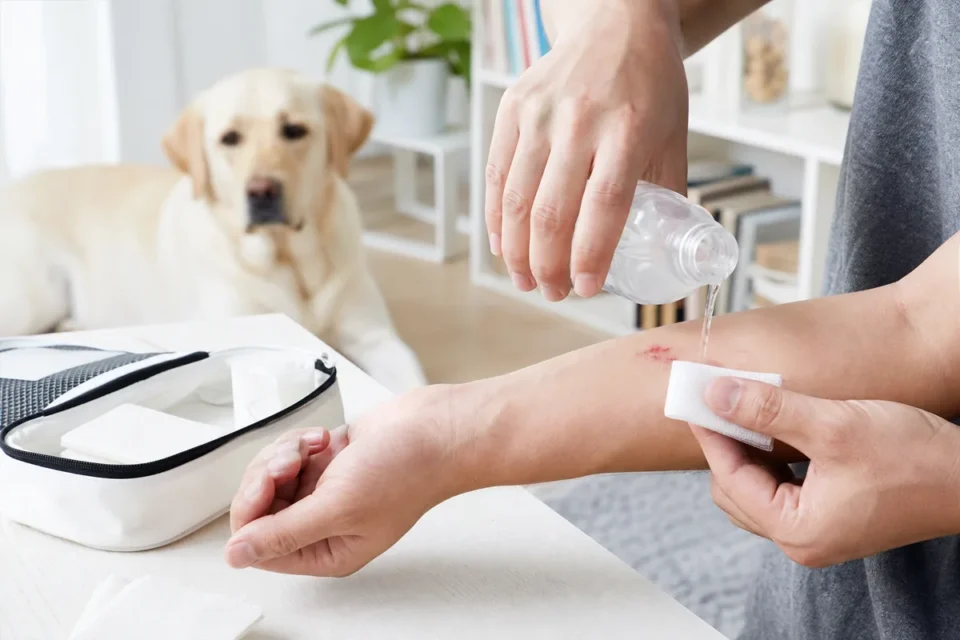
After a dog bite, wash the wound immediately with running water and soap, then assess how serious it is. A small-looking mark can still become infected or hide deeper damage. Call emergency services for a bite to the face, neck or genitals, heavy bleeding, a torn wound, exposed bone, or loss of feeling or movement.
Immediate first-aid steps
- Move calmly away from the animal and make the area safe.
- Wash the wound thoroughly under running water with soap.
- Remove only loose, superficial dirt that comes away easily.
- Rinse, dry gently, use a suitable antiseptic and cover with a sterile dressing.
- Apply firm pressure with a clean cloth if it is bleeding.
Do not try to seal a deep bite yourself. Record the time, location, circumstances and owner’s details when available.
When should you seek medical care?
Get prompt medical advice for a deep wound, a bite to a hand, foot or near a joint, an unknown or stray animal, uncertain rabies status, diabetes, reduced immunity or an out-of-date tetanus vaccination. Increasing redness, swelling, pain, pus, fever or red streaks can indicate infection and need assessment even a day later.
Tetanus and rabies checks
A clinician will review tetanus protection and decide whether a booster or other treatment is needed. Rabies risk depends strongly on the country, the animal and whether it can be observed. In France, a known biting dog is placed under veterinary monitoring for fifteen days, including visits within 24 hours, by day seven and on day fifteen. After a bite abroad or from an unknown animal, seek urgent professional advice rather than waiting for symptoms.
Information to take to the appointment
- Your vaccination record and date of the last tetanus dose.
- The dog’s vaccination record if the owner can provide it.
- The exact time and circumstances of the incident.
- Any condition or medication that weakens immunity.
- A photo showing changes, provided taking it does not delay care.
Frequently asked questions
Does every bite require antibiotics?
No. A clinician considers depth, location, cleaning delay and individual risk. Never use leftover antibiotics.
Is a bite safe if there is no blood?
Not necessarily. A tooth may have broken the skin or damaged tissue. Wash and inspect the area carefully.
Should alcohol be poured into the wound?
Thorough washing with water and soap is the priority. Follow with a suitable antiseptic according to its instructions and known allergies.
Sources officielles : French National Health Insurance guidance.
How can you stay safe during another common summer health risk?
How should the wound be monitored afterwards?
Follow the clinician’s instructions, change dressings with clean hands and compare the skin each day. A photo taken from the same distance can help reveal spreading redness. Do not stop prescribed antibiotics without medical advice. Avoid swimming and friction until the wound has closed properly. Seek another assessment promptly if pain increases, finger or limb movement becomes difficult, swelling spreads or general health deteriorates.
What should the dog owner do?
The owner should secure the animal, exchange contact and insurance details, provide its vaccination record when requested and arrange any legally required veterinary observation. The animal should not be abandoned or hidden, because identifying and monitoring it helps clinicians assess rabies risk. A behavioural review may also reduce the risk of another incident.