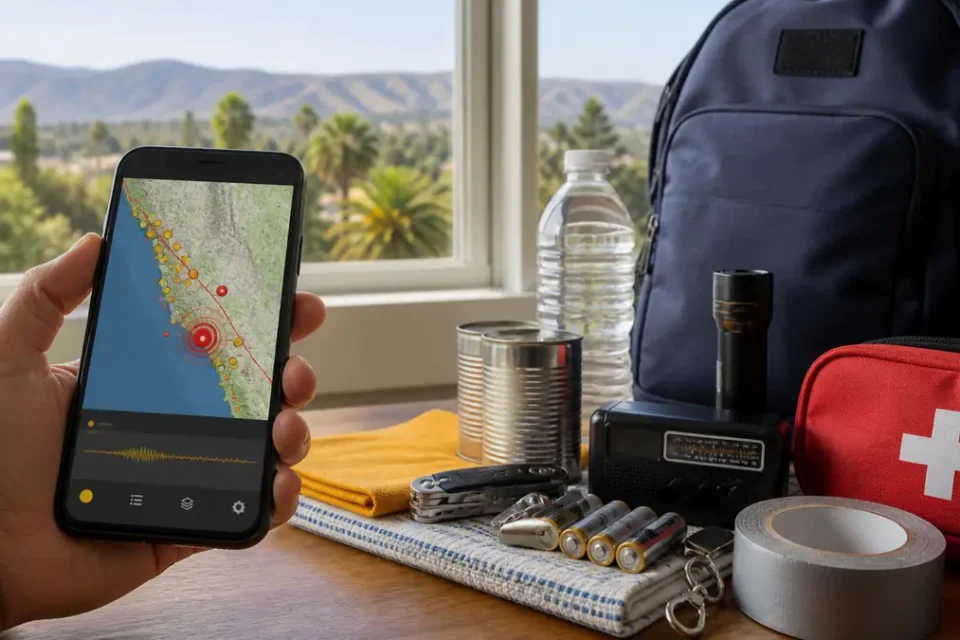
“Earthquake near me” and “USGS earthquake” are surging in Google Trends in the United States. If you felt shaking, use an official map before trusting a viral post. This guide explains how to check the location and magnitude, what an early estimate means and what to do immediately.
How do I check whether an earthquake happened near me?
Open the US Geological Survey Latest Earthquakes map and allow the page to use your approximate location, or search by city and time. Check the event timestamp, distance, depth and reviewed status. A social-media screenshot may show an automatic estimate that has already changed.
Why can the magnitude change?
Initial locations and magnitudes are produced quickly from seismic stations. Analysts can revise them as more signals arrive. A small change does not mean that a second earthquake occurred. Compare the event identification number and time before treating two posts as separate events.
What should I do during shaking?
Drop to your hands and knees, cover your head and neck under sturdy furniture when possible, and hold on. Stay away from windows. Do not run outside while objects are falling, and do not use an elevator. If you are outdoors, move away from buildings and power lines.
What should I check after the shaking stops?
- Check for injuries and immediate hazards.
- Expect aftershocks and be ready to drop, cover and hold on again.
- Use text messages instead of unnecessary calls.
- Follow local emergency alerts.
- Leave a damaged building only when the route is safe.
Does “felt near me” mean damage is likely?
No. Effects depend on magnitude, depth, distance, soil and building construction. A widely felt earthquake may cause little damage, while a shallower event closer to a vulnerable structure can be more disruptive. Use local inspection guidance rather than magnitude alone.
How do I report what I felt?
The USGS “Did You Feel It?” form collects observations that help map shaking intensity. Report only your own experience and approximate location; do not copy another person’s description. The form is not a request for emergency help.
Reliable sources
Check the USGS Latest Earthquakes map and local emergency-management alerts. Avoid accounts that predict an exact larger earthquake: current science cannot provide that type of precise short-term prediction.
Related question: How should earthquake magnitude and aftershock reports be interpreted?
How can I prepare before the next earthquake?
Secure tall furniture, store water and basic supplies, keep shoes and a flashlight near the bed and agree on a family contact plan. Enable official emergency alerts and learn how to turn off utilities only when authorities or clear damage make it necessary.
What should drivers do?
Pull over away from bridges, overpasses, trees and power lines. Stay inside the vehicle until shaking stops. Afterwards, watch for damaged pavement and follow road closures rather than relying on a navigation app that may not yet reflect hazards.
Quick check: save the official event page rather than a screenshot so later revisions remain visible. Record the time you felt shaking and check on neighbours who may need assistance.