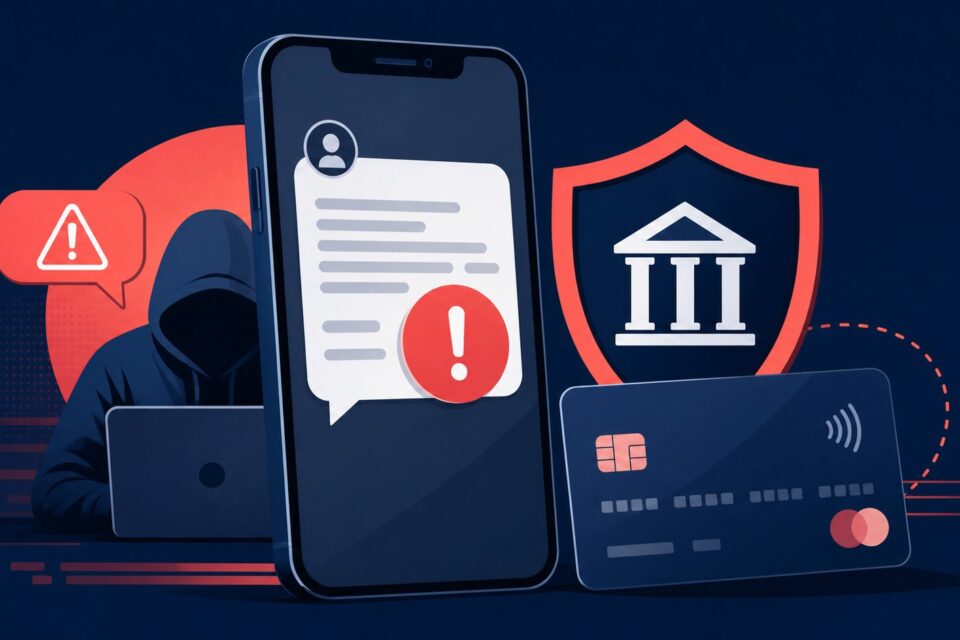
A text reporting a suspicious payment may display a fake card-blocking number or demand an urgent call. The goal is to connect you with an impostor who asks for codes, an approval or a transfer supposedly needed to protect your money.
Quick answer
A criminal may know your name, bank or partial transaction history through stolen data. Those details make the story convincing but do not prove employment by the institution.
Why this trap works
The message may use the bank’s name and a believable amount. Caller ID is not proof: sender names and phone numbers can be spoofed. A bank will not ask you to move savings to a new “safe” account.
The safest method is to slow down, leave the channel creating pressure and return through a known source. An independent check usually takes far less time than recovering an account or disputing a payment.
Step-by-step checks
-
Do not call the number in the text and do not open its link.
-
Open the banking app you normally use and inspect transactions.
-
Contact the institution through the number on the card, inside the app or on an official website you typed yourself.
-
Disclose no password, one-time code or complete card number to an incoming caller.
-
Read every banking approval carefully. Reject it if it names an unknown purchase or recipient.
-
Never transfer money to an account described as a security or holding account.
-
For a real unrecognized transaction, block the card and begin the dispute process immediately.
The point people miss
A criminal may know your name, bank or partial transaction history through stolen data. Those details make the story convincing but do not prove employment by the institution.
Do not decide from one signal alone. A padlock, logo, sender name or top search position can all be copied. Combine the address, context, request and an official channel found independently.
What to do after a click, entry or payment
If you disclosed a code or approved an operation, call the institution immediately through verified details. Ask it to block access and payment methods, change the password from a clean device, and preserve the text, numbers, times and receipts for reporting and dispute.
Act first on what can still be blocked: a session, password, card or payment. Document the incident afterwards. Do not delete messages or logs before preserving useful evidence.
Frequently asked questions
Which blocking number should I use?
Use the official number from your card or banking app, never a number delivered in an unexpected message.
Can the bank request a code by phone?
A representative should not ask you to dictate a code that authorizes a login or payment.
Can a transfer cancel fraud?
No. Moving money to a supposedly safe account is a common scam instruction.
Official sources and update policy
This article prioritizes public or institutional sources. Interfaces and procedures can change, so verify the relevant service’s current instructions before a sensitive action.
A safe independent verification routine
When a message, page or caller asks you to act, write down the claim without using the supplied link or phone number. Close the contact, open the organization’s official app or a bookmark you already trust, and look for the same alert there. If the issue is not visible, contact the organization through details printed on an existing statement, card or official website. Describe the claim without sharing a password or one-time code. This separate route prevents the original sender from controlling both the warning and the supposed solution.
Keep a short record of the time, displayed address, sender and action requested. That information helps a provider investigate and helps you explain the incident to a bank or reporting service. It also avoids repeated clicking while you try to remember what happened.