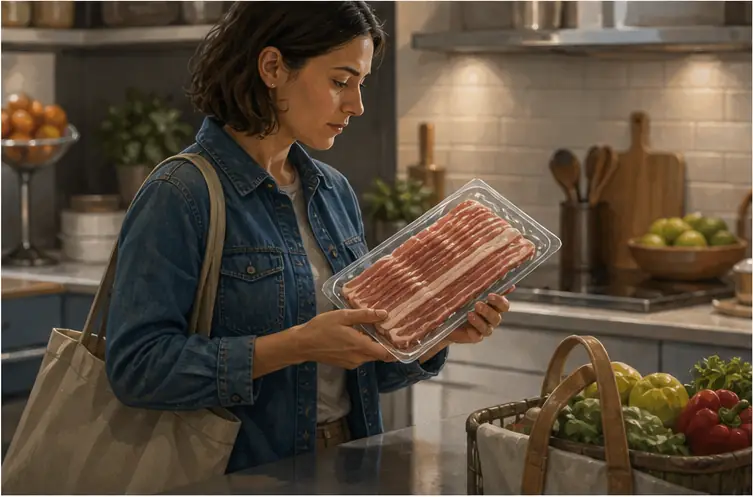
When “bacon recall” trends, the first task is to identify the exact product rather than assuming every bacon product is affected.
A recall notice normally identifies the establishment, product name, package size, lot or date code, distribution information and action to take. A viral post without these details is not enough.
Check the official notice first
Use the USDA Food Safety and Inspection Service recalls and alerts page or the retailer’s verified channel. Match every package detail before disposing of a product. Do not rely on packaging colour, a social-media image or a vague headline.
- Find the brand, package size and date or lot code.
- Compare them with the exact official notice.
- Do not consume a product that matches the recall instructions.
- Follow the notice for return, disposal and customer support.
Avoid spreading false recall claims
A genuine recall may concern only one plant, date, region or product format. Sharing an over-broad warning can cause unnecessary concern and makes official advice harder to find. Share the direct official notice instead.
If you have eaten the product
Do not self-diagnose from a headline. Follow public-health advice and contact a clinician if you have concerning symptoms, especially if you are at higher risk. Keep the packaging if an authority or retailer asks for identification details.
Keep food-recall alerts useful
Set alerts from an official agency or retailer and check the date of the notice. A recalled item should not be passed to another person, donated or sold.
Frequently asked questions
Does a recall mean all bacon is unsafe?
No. Recalls are product-specific; confirm the product details.
Can I cook the product to solve the problem?
Follow the exact official recall instruction rather than guessing.
Official source
Use USDA FSIS recalls and alerts for current US notices.
How to match a product accurately
A brand name alone does not establish that an item is included. Compare the manufacturer, package size, UPC or EAN, lot code and date listed in the notice. One brand may sell several recipes in nearly identical packaging, while the same item may appear under different store labels. Photograph the useful sides before disposing of anything.
Open the official notice rather than relying on a social-media screenshot. Check the publication date and later updates: an authority may expand a recall to more lots or clarify that only one region or production period is affected. If the label is unclear, isolate the product and contact the manufacturer or retailer with the references you can read.
What to do when the details match
- Follow the authority’s exact instruction to avoid, return, discard or destroy the item.
- Do not give it away or feed it to an animal unless the notice expressly says that is safe.
- Clean surfaces, containers and utensils that touched it when the concern is microbiological.
- Keep a receipt or photograph when a refund is available.
Extra cooking is not a universal solution. It may be uneven, insufficient or irrelevant to a particular contaminant. If symptoms develop, contact a healthcare professional with the product, lot, amount and time of consumption. A medical emergency belongs with emergency services, not an online comment section.
Prevent outdated alerts from spreading
Do not share a recall without the official notice and date. An old warning can become viral long after it ended. Also distinguish a recall, an outbreak investigation and general safety advice: they do not always cover the same products or require the same response.
A five-minute check for “Bacon recall: how to check an official USDA notice before you act”
- Date: open the original notice and find its latest update, not only the date of a page summarizing it.
- Scope: confirm that the country, region, product, agreement or event really matches your situation.
- Decisive detail: record the lot, time, domain, rate, warning level or other reference that prevents an overly broad conclusion.
- Channel: take action through the official website or app opened independently.
- Evidence: keep the notice, receipt or useful screenshot with the consultation date.
Three common mistakes
The first is acting on a headline without reading the limits of the notice. The second is sharing a screenshot that has no date or source link, allowing it to circulate after a correction. The third is confusing general information with an individual instruction. Public guidance supports a decision, but the agreement, case, product or local warning remains the reference.
If two credible sources conflict, do not select the more dramatic one. Compare their update times and return to the organization with direct responsibility. Display an important correction clearly so readers who saw the earlier version understand what changed.
Key takeaway
Useful information should support a proportionate action: verify, prepare, contact or wait. It should not manufacture urgency. Take a few minutes to confirm the scope before paying, travelling, discarding a product or changing an agreement.