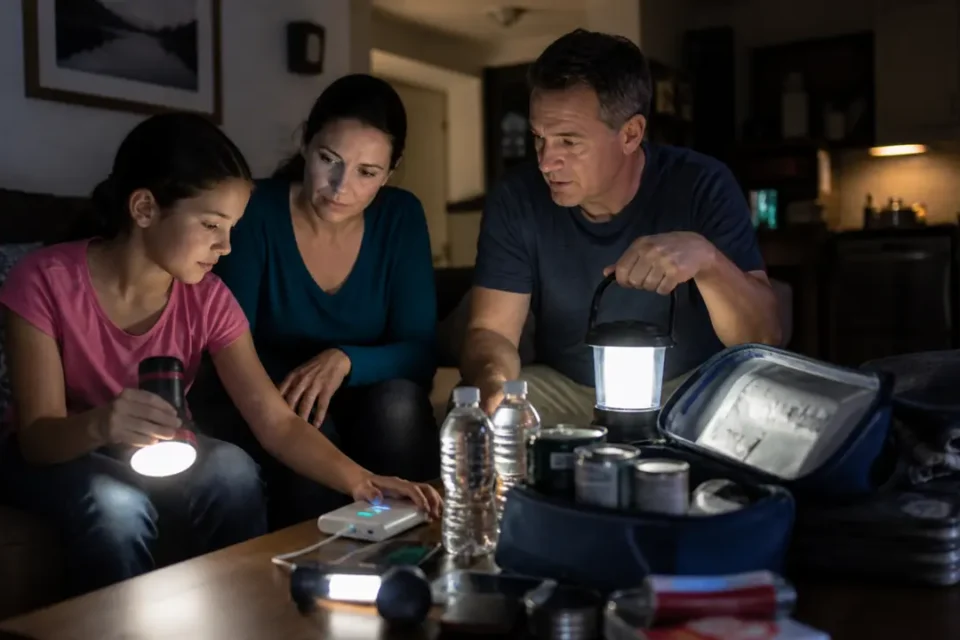
During a power outage, first confirm everyone is safe, use flashlights instead of candles, keep refrigerator doors closed and check official utility alerts. “Power outage” is rising in United States searches on August 16, 2026. This guide covers the immediate steps, food safety, generators, phones and the signs that require emergency help.
What should you do first during a power outage?
- Look outside to see whether the outage affects the neighborhood.
- Check the utility’s official outage map or phone number.
- Unplug sensitive electronics to reduce surge damage.
- Leave one light switched on so you know when service returns.
- Use battery lanterns or flashlights, not open flames.
- Call 911 for immediate danger, not simply to report a normal outage.
If you smell gas, see damaged power lines or observe a fire, move away and contact emergency services. Treat every fallen line as energized. Never touch it or drive over it.
How long will food stay safe?
Keep refrigerator and freezer doors closed. A closed refrigerator generally preserves cold for a limited period, while a full freezer stays cold longer than a half-empty one. Use an appliance thermometer when available. When in doubt about food that has warmed, discard it rather than tasting it to judge safety.
Do not place outdoor ice or snow directly into food storage without considering contamination. Follow current USDA and local health guidance, especially after a long outage.
Can you use a generator?
Portable generators produce carbon monoxide, an invisible and deadly gas. Operate them outdoors, well away from doors, windows and vents, following the manufacturer’s required distance. Never use a generator in a garage, basement, porch or partially enclosed area. A qualified electrician should install any transfer equipment; never backfeed a home by connecting a generator to a wall outlet.
How can you preserve phone battery?
- Enable low-power mode and reduce screen brightness.
- Use text messages when networks are congested.
- Turn off unnecessary Bluetooth, location and background activity.
- Use a charged power bank safely.
- Save utility and emergency numbers before severe weather.
A car may charge a phone, but never run a vehicle in a closed garage. Keep the exhaust clear and follow local safety directions.
What about medical devices?
People who depend on powered medical equipment need a written backup plan. Contact the equipment provider, utility and local emergency-management service before an outage whenever possible. Do not wait until batteries are nearly empty. If a device is essential and backup power is failing, seek emergency assistance.
Should you leave the house?
Leaving may be appropriate during extreme heat or cold, a prolonged outage, a medical risk or an evacuation order. Use an official cooling or warming center rather than an unverified address shared online. Tell a trusted contact where you are going and avoid flooded roads.
How do you avoid outage scams?
Scammers may claim immediate payment is required to restore service. Verify any message through the number printed on a bill or the utility’s official website. Do not give a one-time login code, gift-card payment or remote access to a caller.
Prepare for the next outage
Maintain flashlights, batteries, drinking water, shelf-stable food, a radio, power banks and necessary medication. Test smoke and carbon-monoxide alarms. Write down household contacts and the utility account number, but store personal details securely.
Official guidance
Use Ready.gov power-outage guidance and your local utility’s live information. Updated August 16, 2026.
Related safety question: what should you check when a Samsung TV picture suddenly looks distorted?