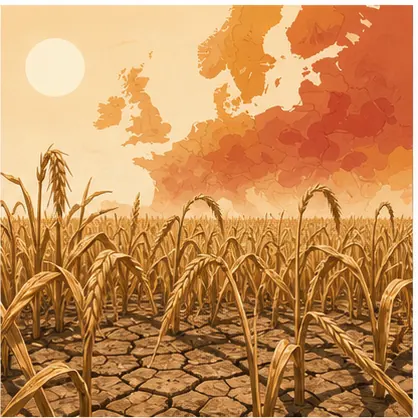
Searches about drought and crop conditions rise when heatwaves repeat across Europe.
The European Commission’s Joint Research Centre monitors crops and soil conditions. Its bulletins provide useful context, not an exact prediction for a shop price.
What an agricultural bulletin measures
Experts examine soil moisture, temperatures, crop development and rainfall. Very hot periods can speed maturity, reduce available water and stress summer crops. Effects differ by region, crop and irrigation.
Why not to jump to conclusions
An estimated yield reduction does not automatically mean a shortage or a broad price spike. Stocks, imports, transport, energy and company decisions also matter. Prefer official agricultural reporting to dramatic, context-free images.
How to follow the issue well
- Check the report date and geographic coverage.
- Separate a forecast from an observation or final assessment.
- Do not mistake a local drought for all of Europe.
- Check local water-authority guidance for your area.
Understanding the indicators helps prevent unsupported alarmist claims.
Sources
Turn an alert into a practical decision
A useful warning identifies an area, time window, level and hazard. Check your address or route on the responsible authority’s map first. A national headline may be accurate without applying to your location. Then read the update time because a storm track, smoke plume, air-quality reading or intensity can change quickly.
Prepare one clear action before conditions worsen: charge the phone, identify solid shelter, secure outdoor objects and set aside water, necessary medicine and a way to receive alerts. For travel, check road status with the official operator rather than an isolated video.
During the event
- Follow local evacuation, shelter or window-closing instructions.
- Do not approach floodwater, fire, fallen power lines or a road hidden by dust.
- Help children, older people and anyone whose health depends on electricity, medication or cleaner air.
- Keep non-urgent calls short to preserve battery life and network capacity.
A mask, purifier, fan or air conditioner does not solve every hazard in the same way. Follow local health advice and never operate combustion equipment in an enclosed space.
After the warning
Wait for an official all-clear before returning to an evacuated area. Photograph damage without exposing yourself, check water and power before use, and report persistent hazards. When accounts conflict, prioritize the weather authority, civil-protection service, fire department or responsible health agency.
A five-minute check for “Europe drought and crops: why searches are rising”
- Date: open the original notice and find its latest update, not only the date of a page summarizing it.
- Scope: confirm that the country, region, product, agreement or event really matches your situation.
- Decisive detail: record the lot, time, domain, rate, warning level or other reference that prevents an overly broad conclusion.
- Channel: take action through the official website or app opened independently.
- Evidence: keep the notice, receipt or useful screenshot with the consultation date.
Three common mistakes
The first is acting on a headline without reading the limits of the notice. The second is sharing a screenshot that has no date or source link, allowing it to circulate after a correction. The third is confusing general information with an individual instruction. Public guidance supports a decision, but the agreement, case, product or local warning remains the reference.
If two credible sources conflict, do not select the more dramatic one. Compare their update times and return to the organization with direct responsibility. Display an important correction clearly so readers who saw the earlier version understand what changed.
Key takeaway
Useful information should support a proportionate action: verify, prepare, contact or wait. It should not manufacture urgency. Take a few minutes to confirm the scope before paying, travelling, discarding a product or changing an agreement.