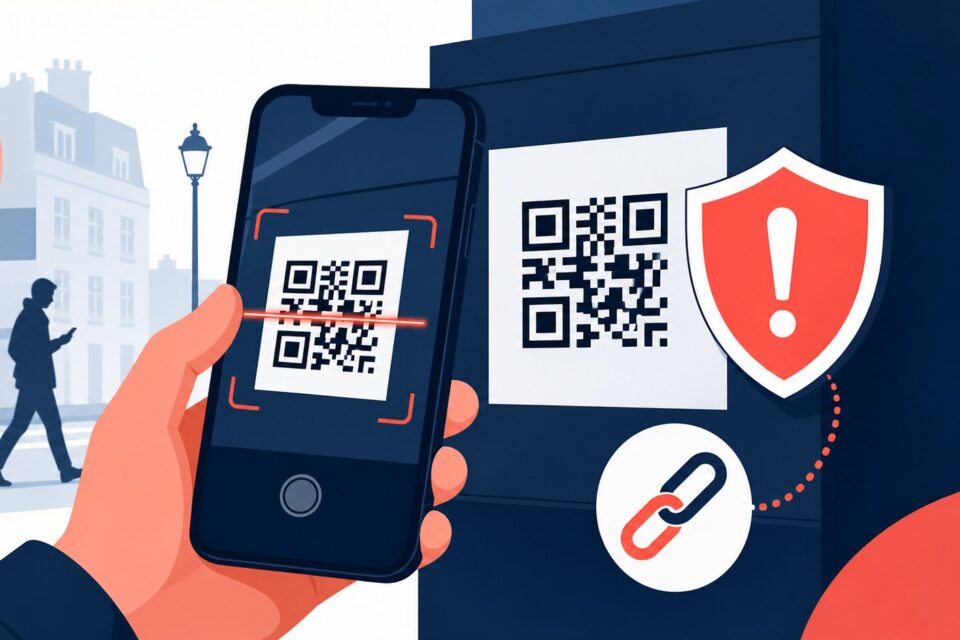
A malicious QR code does not necessarily attack a phone the moment it is scanned. Its main purpose is to hide a destination: copied login form, fraudulent payment, fake website or download. Treat the code as a link whose sender and purpose must be verified.
Quick answer
Scanning and even opening a page do not always mean the device is compromised. The risk rises sharply after entering data, granting permission, approving payment or installing software. This distinction helps you respond without panic.
Why this trap works
The code may arrive in an email, unexpected package, poster, invoice or account-warning message. Because people cannot read the destination by looking at the pattern, it can bypass the suspicion they would apply to a strange written address.
The safest method is to slow down, leave the channel creating pressure and return through a known source. An independent check usually takes far less time than recovering an account or disputing a payment.
Step-by-step checks
-
Ask who supplied the code and why the action is necessary at that moment.
-
Use the link preview and prevent automatic opening. Be cautious with shortened addresses or abandon the scan.
-
Compare the domain with an official site found independently. Watch for substituted letters and misleading subdomains.
-
Do not enter a password after an unexpected scan. Open the service’s normal app instead.
-
Install no file, app or configuration profile offered by the landing page.
-
For payments, verify the recipient, amount and purpose before approving through the bank.
-
Keep the phone and browser updated so known vulnerabilities are patched.
The point people miss
Scanning and even opening a page do not always mean the device is compromised. The risk rises sharply after entering data, granting permission, approving payment or installing software. This distinction helps you respond without panic.
Do not decide from one signal alone. A padlock, logo, sender name or top search position can all be copied. Combine the address, context, request and an official channel found independently.
What to do after a click, entry or payment
Close the page and remove any download. Change credentials you entered from a clean device, enable multi-factor authentication and end unknown sessions. Contact the bank for exposed payment data. Monitor accounts and preserve the code or message as evidence.
Act first on what can still be blocked: a session, password, card or payment. Document the incident afterwards. Do not delete messages or logs before preserving useful evidence.
Frequently asked questions
Can I inspect a QR code without opening it?
Yes. Modern phones normally display the web address in a preview before opening.
Will antivirus block every malicious code?
No. It may detect known domains, but a new page or persuasion-based scam can still get through.
Must I reset my phone after only scanning?
Usually not if nothing was downloaded, installed, authorized or entered. Update the device and monitor it.
Official sources and update policy
This article prioritizes public or institutional sources. Interfaces and procedures can change, so verify the relevant service’s current instructions before a sensitive action.
A safe independent verification routine
When a message, page or caller asks you to act, write down the claim without using the supplied link or phone number. Close the contact, open the organization’s official app or a bookmark you already trust, and look for the same alert there. If the issue is not visible, contact the organization through details printed on an existing statement, card or official website. Describe the claim without sharing a password or one-time code. This separate route prevents the original sender from controlling both the warning and the supposed solution.
Keep a short record of the time, displayed address, sender and action requested. That information helps a provider investigate and helps you explain the incident to a bank or reporting service. It also avoids repeated clicking while you try to remember what happened.
What to read next
These related guides may also help: